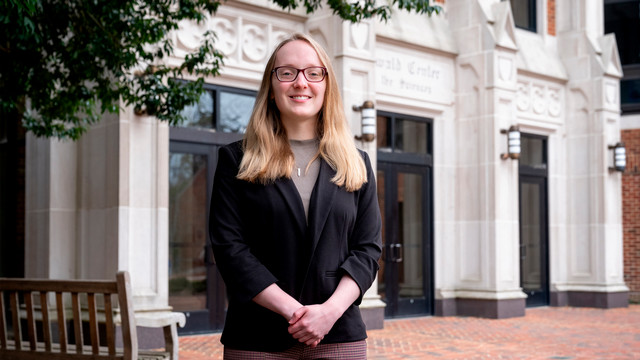
University of Richmond Senior Paxton Mills Awarded Prestigious Scholarship for Blood Disorders Work
Student Scholars
Mills is one of eight in the world to receive the competitive Susan Skinner Scholarship.
UNIVERSITY OF RICHMOND — University of Richmond senior Paxton Mills has been named a Susan Skinner Scholar by the World Federation of Hemophilia. She is one of eight recipients in the world to receive this award, which is open to all women ages 18-60 from around the globe.
Through this award, Mills, a Richmond Scholar who is majoring in biochemistry and molecular biology, will be engaging in leadership training focused on women and girls with bleeding disorders and will be traveling to Malaysia next month to participate in the WFH World Congress, Global National Member Organization Training, and the Annual Meeting of the General Assembly.
Mills’s research and this opportunity are both academic and personal, as she has a rare platelet disorder and plans on becoming a hematologist to both treat and research blood disorders. Her current research focuses on women and girls, who have been historically excluded from bleeding disorders research, which can result in delayed diagnosis, limited treatment, and poorer quality of life. Her hope is to close that gap.
“I am excited to help advance and represent the perspectives of our diverse community, particularly females with bleeding disorders and affected youth,” said Mills. “This immersive experience with the World Federation of Hemophilia will help me grow both personally and academically, and I’m looking forward to engaging with and learning from lived experience experts, hematologists, researchers, advocates, and leaders from all across the world.”
Mills has worked closely with Maria Santaella, vice president of research strategy at the National Bleeding Disorders Foundation.
“The Susan Skinner Award is highly competitive and recognizes exceptional emerging leaders within the bleeding disorders community,” Santaella said. “This honor reflects Paxton’s demonstrated leadership at a remarkably young age, as well as her meaningful contributions across advocacy, education, and research that advance care and outcomes for people living with inheritable bleeding disorders.”
###