
New Book Explores “The Axman” Murders
New Research
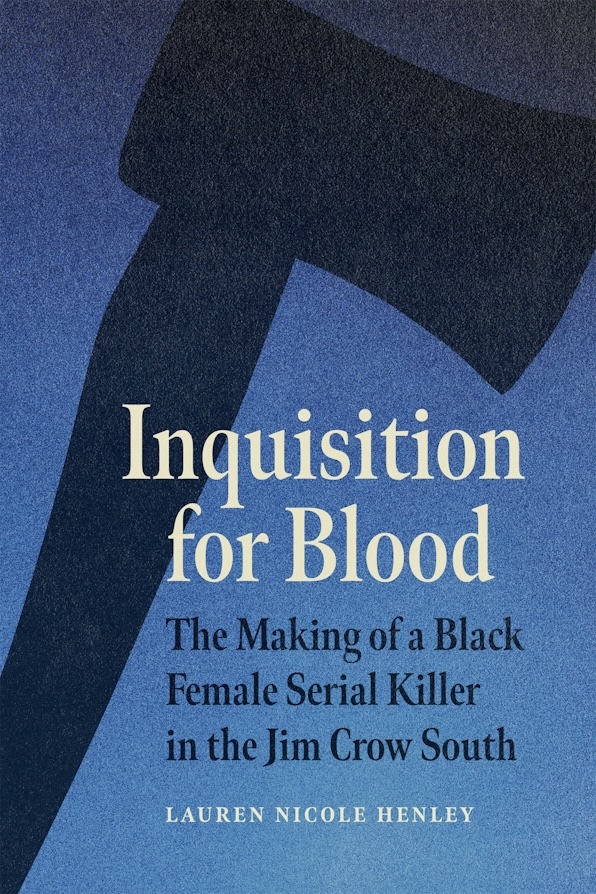
In the early 1900s, a serial killer used an ax to slaughter Black families living near the Southern Pacific Railroad’s Sunset Route. A century before modern forensics, a young Black woman — Clementine Barnabet — was ultimately arrested, but there was a problem: she was in jail when more than half the murders occurred.
Lauren Henley, a historian and professor in the Jepson School of Leadership Studies, explores Barnabet’s story in her new book, Inquisition for Blood: The Making of a Black Female Serial Killer in the Jim Crow South. Henley’s research draws on thousands of archival sources, including more than three thousand newspaper articles, hundreds of pages of court records, prison ledgers, death certificates, censuses, and city directories, as well as interviews with descendants of the crime victims.
As Henley explains, her true crime book unpacks the crimes and frenzy surrounding the murders; how and why the murders were blamed on Clementine; possible motives, including religious reasons; and how Black communities responded to this unknowable violence.
What crimes were terrorizing the region at the time?
Dr. Henley: From November 1909 until August 1912, an unknown assailant — or assailants — zigzagged across southwestern Louisiana and southeastern Texas. Many Black families were slaughtered in their homes under the cover of darkness. An ax – the telltale weapon – was almost always found in the bloody aftermath.
All but one of the scenes were located within a mile of the Southern Pacific Railroad’s Sunset Route. In each case, a mother and child were among the victims. Evidence of additional weapons was often found nearby, suggesting a deliberate cruelty to the carnage.
Dubbed the “axman,” the unknown assailant eluded the authorities and terrified local Black communities.
Who was Clementine Barnabet?
In April 1912, a young Black woman named Clementine Barnabet confessed to murdering four families in and around Lafayette, Louisiana. At the time, widespread news coverage effectively branded her a serial killer.
Why is her story still debated today?
Barnabet’s confession did not align with the timeline of crimes that had gripped America’s rice belt region with fear. In fact, she was in jail when more than half the murders occurred. Even today, her guilt is debated.
What about this case made you want to explore it further?
I wanted to understand why a Black female serial killer seemed possible in Jim Crow America, but appears incomprehensible today. In other words, I was curious about how certain crimes are racialized and gendered, and what the consequences are of these biases.