University of Richmond Plans Research Rat Adoption Program in Collaboration With Second Chance Heroes
Research News
Community members could provide homes for rats and help researchers learn how the animals adjust to life as pets.
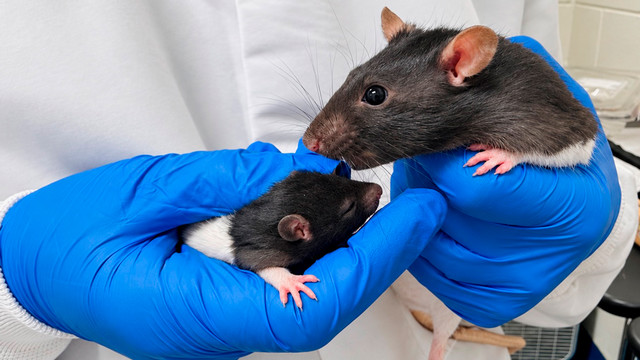
UNIVERSITY OF RICHMOND — The University of Richmond is developing a pilot adoption program to help laboratory rats transition to life as companion animals. In partnership with Second Chance Heroes Rat Adoptions, the program will connect the animals with suitable homes and offer adopters an opportunity to help researchers learn how the rats acclimate to life as pets outside of the laboratory environment.
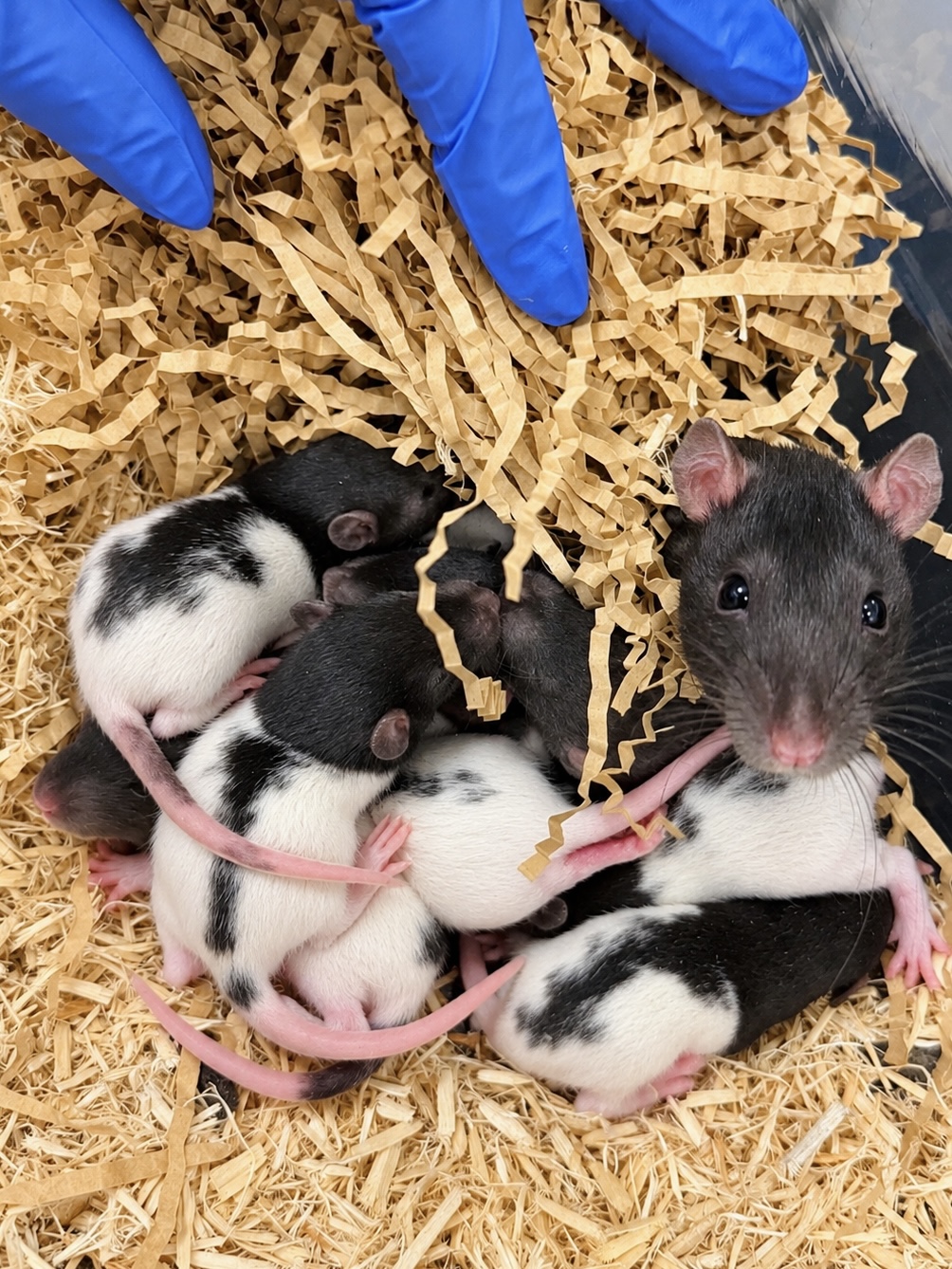
Approximately 70 young rats are expected to become available for adoption beginning in mid-December, once they are old enough to leave their mothers. They are the offspring of rats in research programs led by Kelly Lambert, professor of behavioral neuroscience, whose work includes teaching rats to drive, maternal behavior, and experience-based neuroplasticity. Adoption will be open to University faculty and staff and the general public. University animal care specialist Jamie Wagner is leading the project, which brings together animal care, community engagement, and research.
“Our ultimate goal is to find wonderful matches for these rats, so they can live out their lives in a loving home as pets,” Wagner said.
Prospective adopters will complete an application and screening process designed to match the rats with households prepared to meet their needs. Previous rat ownership is not required, though applicants should be prepared to discuss housing, enrichment, access to veterinary care, and other animals in the household.
Because rats are social animals, the program plans to place them in pairs or groups of up to six. Exceptions may be considered for adopters who already have companion rats at home.
Undergraduate researchers, including pre-vet, neuroscience, and psychology students, are helping prepare the young rats for home life. The specially trained students socialize the animals through supervised handling while gaining experience in animal care. Second Chance Heroes, directed by Eva Cross, will also support the program through fostering and adopter education. The organization has previously helped the University of Richmond find loving homes for retired research rats.
Adopters will also have the option to participate in a community science study examining how the rats adjust to their new environments. This is a natural extension of Lambert’s research focused on enriched environments and healthy brain/behavioral outcomes. Participants would share observations about the animals’ diets, housing, enrichment, behavior, and health. Lambert will also schedule biannual Zoom check-in meetings to discuss relevant research related to rodent behavior and positive life outcomes — appropriate for both children and adults — for interested adopters.
“We are excited to partner with willing adopters to collect observational data about the rats, which will help us learn more about how lab rats adjust to life as pets,” Wagner said. “I strongly encourage all adopters to participate in the study. That component will help us in the future and could serve as a model for other universities and organizations. The more data we obtain, the more support we have in leading other programs to follow the same approach.”
The project’s first priority is finding appropriate homes for the animals. Participation in the study is optional and will not affect adoption eligibility.
Those interested in adopting these rats can learn more and apply here. Animals will be placed as they become ready for adoption and suitable homes are identified. Anyone not selected will be placed on a waitlist and be considered for future adoption opportunities.
###